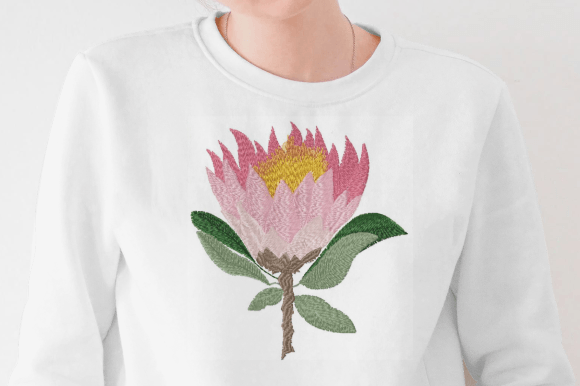
Protea Pink: A Designer’s Review for Craft Fair Success
As an embroidery designer who has spent countless weekends behind a booth table, I know that not every design translates from the screen to the sales floor. When I first loaded the Protea Pink file into my digitizing software, I was looking for more than just pretty petals. I was looking for a craft fair product that would stop shoppers in their tracks. The initial impression is striking. This is not a shy, minimal outline; it is a bold, organic statement piece that feels both modern and timeless. The title suggests a softness, but the execution offers a structural elegance that appeals to a wide demographic, from boutique makers to serious Etsy sellers.
First Impressions and Visual Appeal
The description notes that this design is crafted with love by a family of skilled artisans, and that heritage shows in the stitch flow. Protea Pink breathes life into creative projects because it avoids the rigid, computer-generated look that can sometimes plague digital files. Instead, it mimics the natural irregularity of hand-stitched work while maintaining the precision required for machine production. For a handmade market, this distinction is vital. Customers are increasingly savvy; they can spot a low-effort, auto-digitized pattern from across the aisle. This design feels premium. It strikes a balance between decorative flair and sophisticated simplicity, making it suitable for high-end accessories rather than just novelty items.
When evaluating visual appeal, consider how the design interacts with light. The "brilliant" infusion mentioned in the product details suggests a vibrancy that pops under booth lighting. In a crowded marketplace, your products need to compete with noise and clutter. A design with strong silhouette recognition, like this protea, creates an immediate focal point. It does not require the customer to lean in close to understand what they are looking at. This instant readability is crucial for driving foot traffic to your display.
Product Versatility and Market Fit
One of the strongest assets of Protea Pink is its adaptability across various substrates. As a designer, I always test a new machine embroidery design on multiple surfaces before committing to batch production. Here is how it performs on key items:
- Tote Bags: This is arguably the best application. A large tote bag provides enough canvas for the protea to shine as a central motif. The organic curves of the flower complement the casual utility of a cotton or canvas bag, creating a chic, everyday accessory.
- Aprons and Tea Towels: For kitchen textiles, scale is everything. On an apron, place the design on the bib or lower corner for a balanced look. For tea towel embroidery, ensure the design is scaled down appropriately so it doesn’t overwhelm the fabric width. The floral theme fits perfectly with the current trend of elevated home goods.
- Embroidered Patches: If you plan to create iron-on or sew-on patches, this design works well if you utilize a satin stitch border to contain the edges. However, be mindful of the internal details. Tiny elements may get lost if the patch is too small.
- Caps and Headwear: Embroidering on curved cap surfaces requires careful hoop placement. The protea’s asymmetrical nature can actually work in your favor here, allowing you to angle the bloom along the curve of the brim or side panel for a dynamic look.
- Pillow Covers and Pouches: These make excellent impulse buys at a craft fair. A small fabric pouch with a single, well-placed protea feels like a luxurious gift item, increasing the perceived value of a small shop product.
Production Practicalities and Technical Notes
While the aesthetic is strong, practical production concerns must be addressed before you list this as a commercial embroidery product. Always check the specific details of your digital embroidery file regarding stitch count and recommended hoop size, as these were not explicitly provided in the brief description. Here are critical technical considerations:
Stitch Density and Fabric Texture: Floral designs often have areas of high stitch density, particularly in the center of the bloom. On thick fabrics like denim or heavy canvas, this is rarely an issue. However, on lighter fabrics or textured towels, high density can cause puckering. Always use the correct stabilizer. For toweling, a cut-away stabilizer is usually safer than tear-away to prevent distortion after washing. Test the design on scrap fabric first to see how the thread colors interact with the fabric texture.
Small Details and Clarity: If you intend to use Protea Pink as a small accent on a collar or cuff, verify that the fine lines remain clear. Some intricate petals may merge if stitched too small. I recommend creating at least one real mockup at your intended minimum size to inspect clarity. If the details blur, consider simplifying the design or increasing the size for those specific applications.
Thread Contrast: The beauty of this design relies on contrast. On dark fabric, ensure you are using bright, high-visibility threads. On white or cream fabrics, subtle tonal variations can look elegant but may lack impact from a distance. Choose your thread colors based on where the product will be sold. For online listings, high contrast photographs better, aiding your printable mockup creation and Etsy seller visibility.
Boosting Brand Consistency and Sales
For creative entrepreneurs, consistency is key to building a recognizable brand. Protea Pink offers a cohesive look that can tie together a diverse product line. Whether you are selling finished products or design assets, this floral motif signals quality and attention to detail. It enhances booth display strength by providing a unifying visual theme. When customers see the same elegant flower on a tote, a pillow, and a patch, it reinforces the professionalism of your handmade product line.
Furthermore, this design supports effective marketing. It photographs beautifully for social media and online stores. The organic shapes create interesting shadows and highlights that add depth to flat-lay photos. Use these images to create engaging printable mockups for your digital listings, showing potential buyers exactly how the design looks on different items. This reduces hesitation and increases buyer engagement.
Final Designer Recommendations
Before launching Protea Pink into your inventory, take these final steps. First, confirm commercial licensing terms. Ensure that your purchase of the embroidery file allows for the sale of finished physical goods. Second, run a test stitch-out on your most common fabric type. Check for thread breaks, nesting, or registration issues. Adjust tension if necessary. Finally, consider the seasonality. While florals are perennial sellers, they peak in spring and summer. Plan your production schedule accordingly to maximize sales during high-traffic craft fair seasons.
In conclusion, Protea Pink is a versatile, high-quality addition to any embroidery designer’s library. It balances artistic flair with commercial viability, making it an excellent choice for tote bag design, apron embroidery, and other handmade accessories. By paying attention to stitch density, fabric choice, and presentation, you can turn this digital asset into a standout star of your next market event.